
Why Fiberglass Pool Removal Is Worth Getting Right
Fiberglass pool removal is one of those projects that looks simple on the surface — but quickly becomes complicated once a crew and heavy machinery show up.
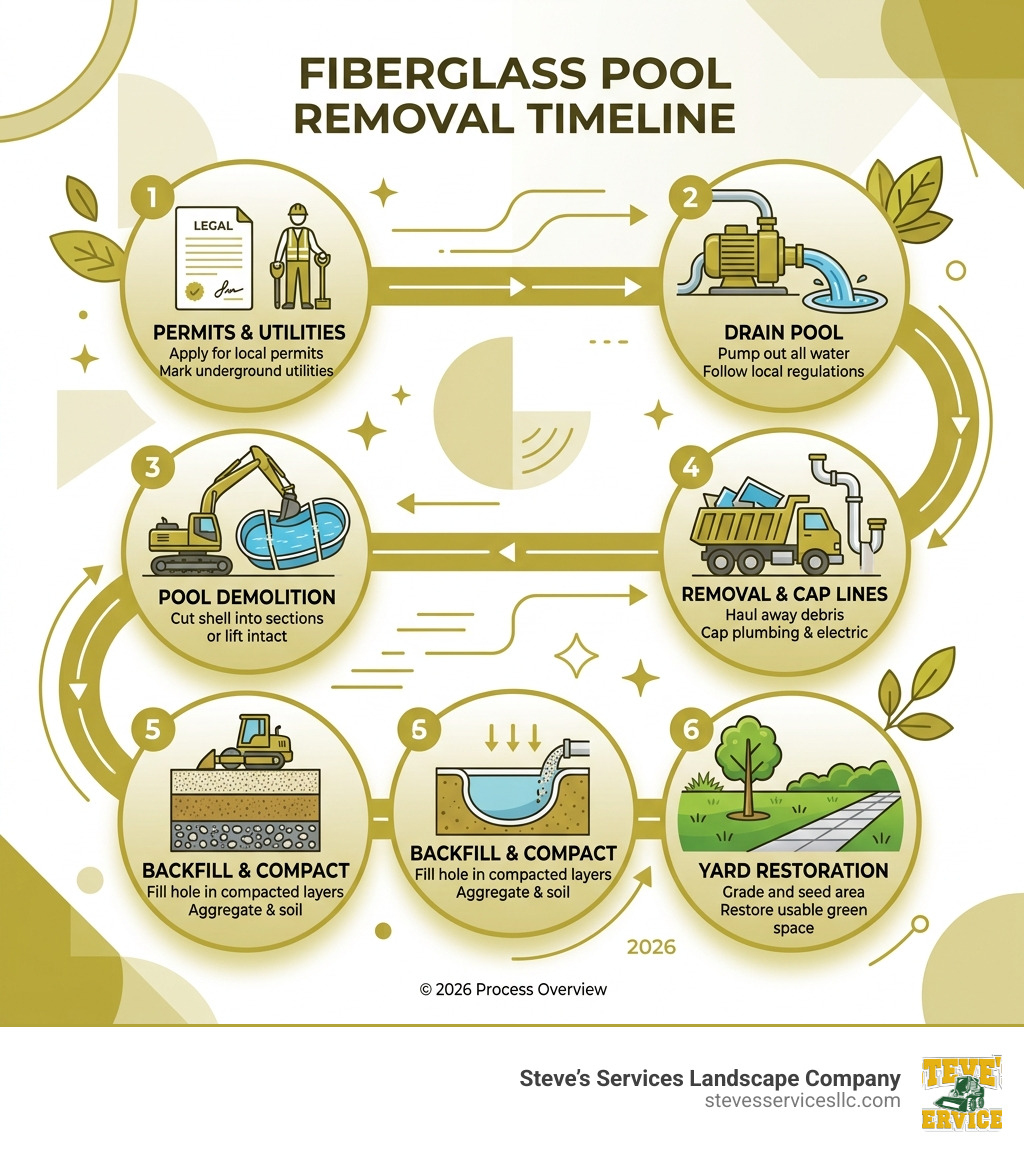
Before diving into the details, here’s a quick overview of what the process involves:
Fiberglass Pool Removal: Quick Overview
| Step | What Happens |
|---|---|
| 1. Permits | Pull required local permits and call Miss Utility to mark utilities |
| 2. Drain | Pump out all pool water per local regulations |
| 3. Demolish | Cut the fiberglass shell into sections or lift it out intact |
| 4. Remove | Haul away shell pieces, cap plumbing and electrical lines |
| 5. Backfill | Fill the hole in compacted layers with aggregate, fill dirt, and topsoil |
| 6. Restore | Grade, seed, and restore the yard to usable green space |
Homeowners remove pools for all kinds of reasons. Safety is a big one — the CDC estimates roughly 4,000 Americans die from drowning each year, and many of these incidents occur in residential swimming pools. Others are tired of the upkeep, want to reclaim yard space, or are getting ready to sell and know that an aging pool can actually hurt their home’s value.
Whatever the reason, doing this job right matters. Poor backfill leads to sinkholes. Buried debris creates voids. Skipped permits create legal headaches when you sell.
This guide walks you through everything — the process, the costs, the restoration — so you know exactly what to expect.
I’m Steve Sylva, owner of Steve’s Services Landscape Company in Malden, MA, and with over 25 years of experience in landscaping and site work, I’ve seen what a properly executed fiberglass pool removal can do for a property. Let’s walk you through what you need to know before the crane arrives.
Fiberglass pool removal terms at a glance:
The Mechanics of Fiberglass Pool Removal
When we talk about fiberglass pool removal, we are dealing with a unique animal. Unlike a vinyl liner pool with its thin walls or a heavy gunite pool made of sprayed concrete, a fiberglass pool is a single, reinforced plastic shell. It was likely craned into your yard in one piece, and getting it out requires a reverse engineering approach.
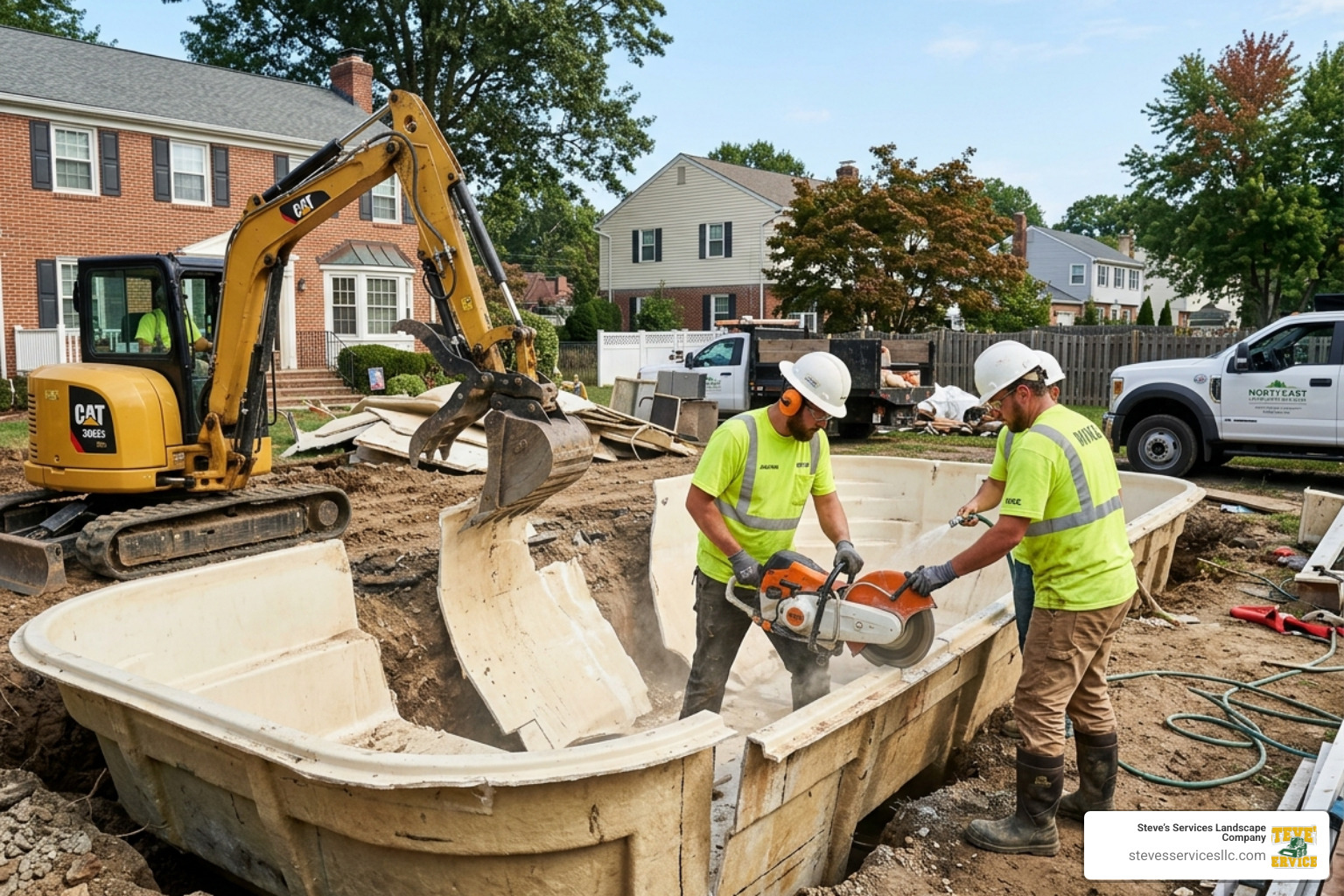
The process begins with a total drain. We never recommend doing this yourself, as hydrostatic pressure (groundwater) can actually cause a fiberglass shell to “pop” or float if not managed correctly, potentially damaging surrounding structures. Once the water is gone, the real work begins. We use heavy machinery—typically an excavator or a Bobcat—to expose the edges and disconnect the “umbilical cords” of the pool: the plumbing and electrical lines.
The Step-by-Step Fiberglass Pool Removal Procedure
While every backyard in towns like Melrose or Reading has its own quirks, the Fiberglass Pool Removal Step by Step Process generally follows these stages:
- Utility Disconnection: We locate and cap all gas, water, and electrical lines. This isn’t just a “turn it off” situation; lines must be safely terminated or removed to meet local Massachusetts building codes.
- Shell Sectioning: Because a full shell is massive and awkward to transport, we often use specialized saws to cut the fiberglass into manageable pieces. This allows for easier hauling and more efficient disposal at C&D (Construction and Demolition) facilities.
- Decking Demolition: If you have a concrete or paver deck surrounding the pool, we break this up. In a Full Pool Removal, this material is hauled away.
- Extraction: The pieces of the shell, along with any internal components like lights or jets, are lifted out and loaded into trucks.
Why Professional Fiberglass Pool Removal is Essential
It can be tempting to think a Fiberglass Pool Removal is a DIY weekend project, but the risks are significant. Specialized equipment is required to cut through reinforced fiberglass without creating a hazardous mess of dust and shards.
Furthermore, Inground Swimming Pool Removal in areas like Malden or Everett requires strict permit compliance. If you don’t have the right paperwork and inspections, you may face massive fines or issues when trying to sell your home later. A professional team ensures that the structural integrity of your yard is maintained and that all liability is managed through proper insurance and licensing.
Full vs. Partial Removal Methods
One of the first questions we ask homeowners is: “What do you plan to do with the space?” Your answer determines whether you need a full extraction or a partial fill-in.
| Feature | Full Removal | Partial (Fill-in) Removal |
|---|---|---|
| Process | Entire shell and all debris hauled away. | Top of shell removed; bottom broken for drainage. |
| Future Building | Can build structures (patios, additions) on top. | Generally limited to landscaping/green space. |
| Resale Impact | Maximum value; no disclosure issues. | Must be disclosed; may deter some buyers. |
| Cost | Higher (due to hauling and disposal fees). | Lower (less labor and debris removal). |
When to Choose Full Extraction
If you ever plan to build a New Patio or an addition where the pool once sat, full extraction is the only way to go. Removing the entire shell ensures there are no non-native materials left in the ground that could cause shifting or drainage issues. This method provides total yard reclamation and is the gold standard for maintaining real estate value. For a deeper look at the differences, check out our guide on How To Remove A Inground Swimming Pool.
The Limitations of Partial Fill-ins
A partial fill-in (sometimes called “abandonment”) involves collapsing the top few feet of the pool walls into the bottom and filling the rest with dirt. While Companies That Fill In Inground Pools can offer this as a budget-friendly option, it comes with risks. The buried fiberglass can create “voids” if not compacted perfectly, leading to sinkholes years later. Additionally, Massachusetts law often requires you to disclose a buried pool during a home sale, which can complicate the process for potential buyers.
Factors Influencing Fiberglass Pool Removal Cost
When budgeting for fiberglass pool removal, it is important to understand that no two yards are the same. A project in a wide-open lot in Lynnfield will cost less than a project in a tight, urban backyard in Revere where machinery can barely fit between the houses.
Regional Pricing and Permit Fees
In our service area—including Middlesex and Essex Counties—costs are influenced by local disposal fees and labor rates. In Ground Pool Removal Cost includes the price of the permit (which can range from $100 to $500 depending on the town) and the cost of the mandatory inspections. Some municipalities require a “photo journal” of the backfill process to prove the soil was compacted in proper “lifts” before they will sign off on the final permit.
Budgeting for Your Project
Based on internet-based averages, the cost for fiberglass pool removal typically ranges from $5,000 to $60,000, with a national average often cited around $15,000. These are general industry averages and are not specific quotes for Steve’s Services.
The wide range is due to several factors:
- Small Pools (<300 sq ft): Often fall on the lower end of the spectrum.
- Large Pools (>600 sq ft): Require more labor, more fill dirt, and higher disposal fees.
- Accessibility: If we have to use smaller equipment or crane pieces over a house, the labor costs (which usually make up 60-70% of the total) will rise significantly.
- Disposal: Fiberglass is a composite material that must be taken to specific C&D facilities, which may charge more than standard clean-fill sites.
To get a better idea of the financial commitment, see our breakdown of How Much Does It Cost To Remove An Inground Pool.
Site Restoration and Yard Transformation
The demolition is only half the battle. What happens after the shell is gone is what determines the future beauty and safety of your yard. Proper restoration is where our expertise as a Landscape Company really shines.
Preventing Future Sinkholes and Settling
The most common mistake in fiberglass pool removal is “dumping and jumping”—simply throwing dirt into the hole and calling it a day. This is a recipe for a sinkhole. We use a process called “lifts.” We fill 6-8 inches of soil at a time and use heavy vibratory plates or rollers to compact it before adding the next layer. This ensures the ground is as solid as the “virgin” soil around it.
In some towns like Wakefield or Stoneham, local codes may even require a specific depth of aggregate (crushed stone) at the bottom to ensure proper drainage. You can learn more about how we handle these heavy-duty tasks on our Pool Demolition page.
Hardscaping and Landscaping Opportunities
Once the hole is filled and graded, you have a blank canvas. Many of our clients choose to Convert Swimming Pool To Patio. Instead of a high-maintenance water feature, you can have a beautiful outdoor kitchen, a fire pit, or a lush new lawn.
We specialize in New Lawn Installs and Hardscaping Services, ensuring that the final result doesn’t just look like a “filled-in hole,” but like a purposeful, designed part of your home.
Frequently Asked Questions about Fiberglass Pool Removal
How long does the removal process typically take?
A standard fiberglass pool removal project usually takes about 3 to 6 days of on-site work. However, the total timeline can be 2 to 4 weeks when you factor in the time it takes for the town to issue permits and for Miss Utility to mark the underground lines. Weather is also a factor; we prefer to perform removals on dry days to prevent heavy machinery from sinking into the mud and damaging your lawn.
Can a fiberglass shell be removed intact for reuse?
Technically, yes, but it is rare. Fiberglass is flexible, which allows it to be craned out in one piece if the suction from the groundwater is managed (often by “floating” the pool with a little water underneath while lifting). However, relocating a pool is often as expensive as buying a new one due to the specialized transportation permits and the risk of the shell cracking during transit. Most homeowners find it more cost-effective to simply dispose of the old shell.
What permits and inspections are required?
Most towns in our service area, from Malden to Winchester, require a demolition permit. You will also need a “final grade” inspection. We handle the paperwork and coordinate with local officials to ensure everything is documented. This often includes taking photos of the compaction process to provide a “photo journal” for future homeowners or tax authorities. For more details on the legal side, visit our Pool Demolition service page.
Conclusion
Deciding to move forward with fiberglass pool removal is a big step toward reclaiming your property. Whether you are looking to eliminate safety hazards, cut down on $2,000+ in annual maintenance costs, or simply want a yard that your family can actually use for something other than swimming, we are here to help.
At Steve’s Services Landscape Company, we pride ourselves on being more than just a “demo crew.” We are site restoration experts. From the first permit to the final blade of grass on your New Lawn, we handle every detail with the care and professionalism that comes from decades of serving the Malden community.
Ready to take back your backyard? Contact us today for an estimate, and let’s get started on your yard’s transformation.
Like us on Facebook!
