
Why Your Remodel Needs a Project Maestro

Finding the right general contractors for home remodeling can make or break your renovation dreams. With the U.S. remodeling market projected to reach $456 billion in 2023, homeowners are investing heavily in changing their spaces – but success depends on choosing the right professional to lead the charge.
Quick Answer: What to Look for in General Contractors for Home Remodeling:
- Licensed and insured with proper Workers’ Compensation coverage
- Detailed written contracts outlining scope, timeline, and costs
- Positive references from recent similar projects
- Clear communication and professional responsiveness
- Comprehensive project management including permits and subcontractor coordination
- Quality control processes and workmanship warranties
A general contractor acts like a project maestro, coordinating every aspect of your remodel from permits to final cleanup. They manage subcontractors, ensure code compliance, and serve as your single point of contact throughout the process. About 75% of homeowners undertake remodeling projects to improve functionality, and the average homeowner spends 1-3 months searching for the right contractor.
The stakes are high – while homeowners can expect to recoup 70-80% of their remodeling costs upon selling, poor contractor choices can lead to delays, cost overruns, and subpar results. One Reddit user shared how their parents were “screwed over multiple times from contractors,” highlighting the importance of thorough vetting.
As Steve Sylva, owner of Steve’s Services with over 25 years of experience in the construction and home improvement industry, I’ve worked alongside countless general contractors for home remodeling and understand what separates the professionals from the problematic. My experience managing complex projects has taught me the critical factors that ensure successful renovations and satisfied homeowners.
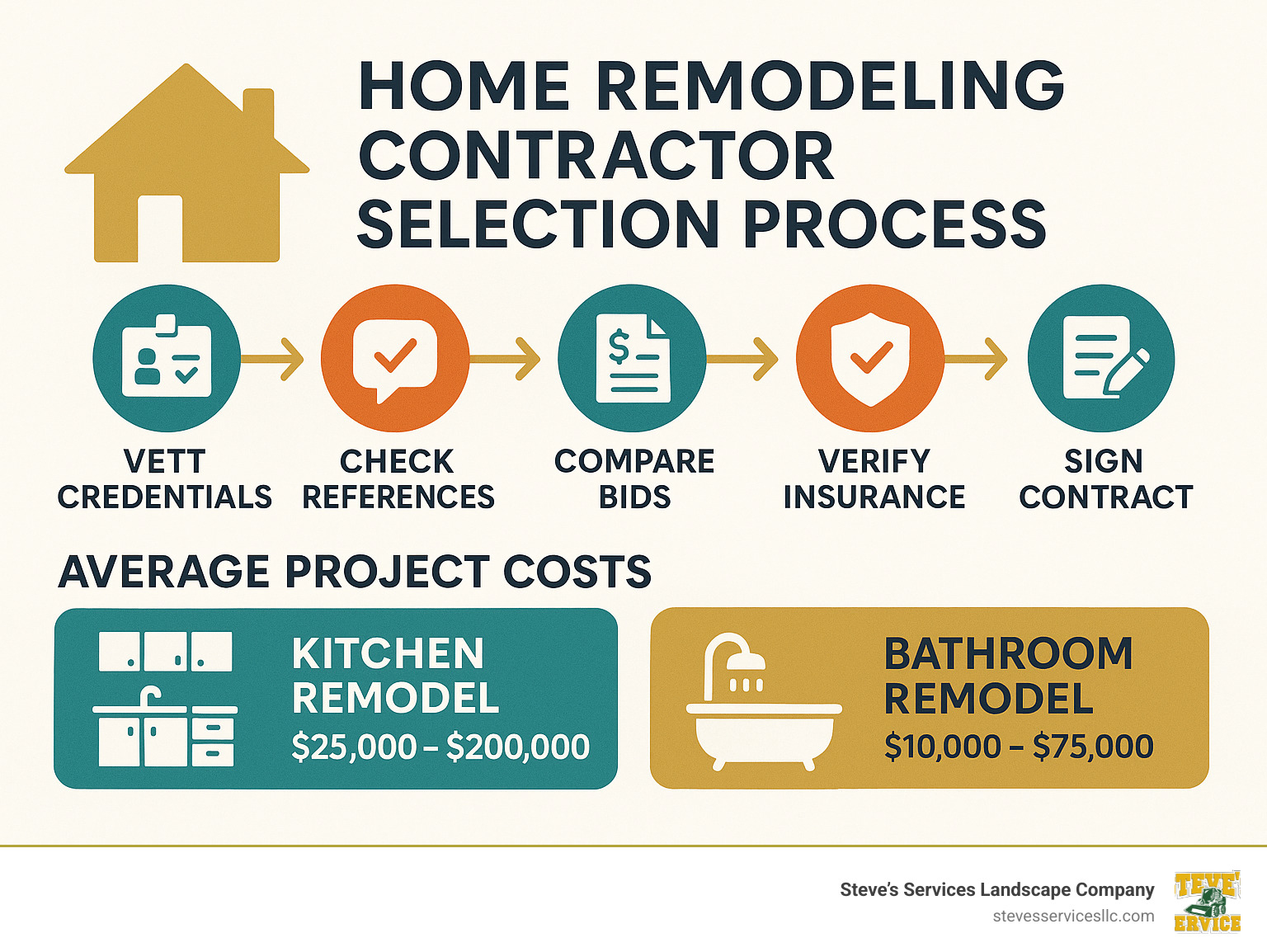
Simple general contractors for home remodeling word guide:
- General Contracting Services
- find home improvement contractors
- licensed home improvement contractors near me
The Power of One: Key Benefits of Hiring a General Contractor
When starting on a home remodeling project, especially a significant one, the thought of managing multiple tradespeople, schedules, and budgets can feel overwhelming. This is precisely where the power of a skilled general contractor shines. They are the single point of contact, taking the stress off your shoulders and ensuring a smooth, cohesive process.
Imagine trying to coordinate electricians, plumbers, carpenters, and painters all while trying to maintain your daily routine. It sounds like a circus, doesn’t it? A general contractor acts as your project ringmaster, orchestrating every detail. They manage scheduling, overseeing the various trades, and ensuring everyone is working together efficiently. In fact, general contractors often manage 5-10 projects simultaneously, demonstrating their ability to juggle complex tasks and keep things moving forward.
Beyond coordination, a reputable general contractor brings a network of vetted subcontractors to the table. This means you don’t have to spend weeks searching for a reliable plumber or electrician; your general contractor already has established relationships with trusted professionals, ensuring quality workmanship and timely completion. They also handle the nitty-gritty details like obtaining necessary permits and ensuring all work complies with local building codes. This is a huge relief, as navigating permits can be a complex and time-consuming process.
A general contractor ensures quality control throughout the entire project, manages the budget to avoid unexpected cost overruns, and works diligently to adhere to the agreed-upon timeline. This holistic approach is why we at Steve’s Services often recommend working with experienced General Home Improvement Contractors for larger remodeling endeavors.

General Contractor vs. Specialized Contractor
Understanding the difference between a general contractor (GC) and a specialized contractor is crucial for any remodeling project. Think of it this way: a general contractor is the conductor of the orchestra, while specialized contractors are the individual musicians.
A general contractor oversees the entire remodeling project. Their role is comprehensive, handling project management, budgeting, scheduling, hiring and supervising subcontractors, and ensuring the overall quality and completion of the work. They are responsible for the big picture, making sure all the different pieces fit together seamlessly. For example, if you’re undertaking a full kitchen renovation that involves moving walls, redoing plumbing, and installing new electrical, a GC is your go-to.
A specialized contractor, on the other hand, focuses on a single trade or area of expertise. This could be a plumber, an electrician, a roofer, or a cabinet installer. You would typically hire a specialized contractor for smaller, more isolated projects, like replacing a water heater or installing a new light fixture.
You would hire a GC for complex projects involving multiple trades and requiring extensive coordination. For simpler, single-trade jobs, a specialized contractor might be sufficient. The complexity and scope of your project will dictate which type of professional you need.
Maximizing Your Investment
Home remodeling isn’t just about aesthetics; it’s a strategic investment in your property’s value and your quality of life. We’ve seen how a well-executed renovation can significantly improve a home’s appeal and functionality.
The statistics speak for themselves: homeowners can expect to recoup an average of 70-80% of their remodeling costs upon selling their home. This isn’t just about getting your money back; it’s about increasing your home’s market value. Beyond monetary returns, about 75% of homeowners undertake a remodeling project to improve their home’s functionality. This could mean creating a more open living space, adding a much-needed bathroom, or modernizing an outdated kitchen.
For example, a major kitchen remodel, while costly, is the most popular remodeling project and often yields a high return on investment due to its impact on daily living and home resale. Similarly, bathroom renovations are highly sought after. By partnering with experienced Find Home Improvement Contractors, you’re not just spending money; you’re investing in a home that better suits your needs and offers substantial long-term value.
Your Vetting Checklist: How to Find and Hire the Right General Contractors for Home Remodeling
Finding the right general contractors for home remodeling is arguably the most critical step in your renovation journey. It requires diligent research and a systematic approach. We always advise homeowners in communities like Everett, Medford, and Malden to start by seeking out candidates through personal recommendations from friends, family, and neighbors. These trusted referrals often lead to contractors with proven track records. Online platforms like Houzz and local Facebook groups can also be valuable resources, but always proceed with caution and thorough vetting.
Once you have a list of potential contractors, the real work begins: verifying their credentials. Always check for proper licensing and ensure they carry both Workers’ Compensation and business liability insurance. This protects you from liability if an accident occurs on your property or if a worker is injured. As one source cautioned, “cash deals” without proper insurance or contracts can leave you vulnerable to significant financial and legal risks.
Finally, getting multiple bids is essential. This isn’t just about comparing prices; it’s about understanding the scope of work, material specifications, and the contractor’s approach. We recommend getting at least three detailed bids to ensure you’re making an informed decision.

What to Look for in a Contractor’s Bid
A contractor’s bid is more than just a number; it’s a blueprint of their understanding of your project and their professionalism. A thorough bid should be clear, comprehensive, and leave little room for ambiguity. Here’s what to look for:
| Detailed, Professional Bid | Vague, Red-Flag Bid |
|---|---|
| Detailed Cost Breakdowns: Itemized list of materials, labor, and subcontractor costs. | Lump Sum: Only a total price, no breakdown of costs. |
| Material Specifications: Specific brands, models, and quantities. | Generic Descriptions: “Standard materials” or “allowance for finishes.” |
| Project Timeline: Clear start and estimated completion dates, with key milestones. | Undefined Timeline: “Will start soon” or “as long as it takes.” |
| Payment Schedule: Phased payments tied to project milestones (e.g., 10% upfront, then payments at rough-in, drywall, completion). | Large Upfront Deposit: Demanding 50% or more upfront, or full payment before work begins. |
| Clear Exclusions: What is not included in the bid (e.g., homeowner-supplied fixtures). | Ambiguous Scope: Unclear what is included or excluded, leading to potential “extras.” |
| Permit Responsibility: States who is responsible for obtaining permits. | No Mention of Permits: Assumes homeowner will handle or ignores the requirement. |
| Warranty Details: Clearly outlines the warranty on labor and materials. | No Written Warranty: Relies on verbal promises. |
A red flag to watch out for is a bid that is significantly lower than others. While a great deal seems appealing, it often indicates shortcuts in materials, labor, or a lack of proper insurance and permits, which can cost you more in the long run.
Red Flags to Watch Out For When Hiring
Unfortunately, not all contractors operate with integrity. We’ve seen homeowners fall prey to less-than-reputable individuals, and it’s heartbreaking. Knowing the red flags can save you immense headache, time, and money.
One of the biggest warning signs is a contractor who offers “cash deals” or insists on cash payments without a written contract or receipts. As one source bluntly puts it, these are “no deal at all.” These arrangements shift all the risk onto you, leaving you with no legal recourse if the work is incomplete, shoddy, or if an uninsured worker gets injured on your property.
Other significant red flags include:
- High-pressure sales tactics: Rushing you to sign a contract or make a decision.
- Vague or incomplete contracts: As discussed above, a lack of detail is a major problem.
- Lack of references or unwillingness to provide them: If a contractor can’t or won’t provide references from recent projects, walk away.
- No proof of insurance: Always ask for current certificates of Workers’ Compensation and business liability insurance directly from their insurance provider, not just a copy from the contractor. A contractor with a $2M liability policy is a good sign.
- Unprofessional communication: Difficulty reaching them, missed appointments, or reluctance to answer your questions clearly can indicate future communication issues during the project.
- Non-disparaging clauses in contracts: Some contractors try to include clauses that prevent you from leaving negative reviews. This is a huge red flag, as it shows a lack of confidence in their work and an attempt to suppress honest feedback.
For your protection, always insist on a written contract for all work, no matter the size of the job. And always verify that your chosen Licensed Home Improvement Contractors Near Me have the proper credentials.
The Contractor Interview: 12 Critical Questions to Ask Before You Sign
Once you’ve identified potential general contractors for home remodeling and reviewed their bids, it’s time for the interview. This is your chance to truly vet them, understand their approach, and assess if they’re the right fit for your dream home. We’ve compiled 12 critical questions we recommend asking, drawing from our experience and industry best practices. You might even find this Helpful contractor interview worksheet useful.
Here are the questions to guide your conversation:
- What is the history of your company and how long have you been in business? This helps gauge their stability and experience.
- What specific services do you offer for home remodeling projects? Ensure their services align with your project needs (e.g., kitchen, bathroom, additions).
- Do you have experience with renovations similar to the one I have in mind? Ask for specific examples and how many they’ve completed recently.
- Can you provide references from past clients with similar projects? Request at least three and commit to calling every single one.
- Can I visit one of your current or recently completed projects? Seeing their work firsthand, and how they maintain a job site, speaks volumes.
- Do you carry Workers’ Compensation and business liability insurance? Request proof and verify it with their insurance provider.
- Will I receive a written contract detailing all aspects of the project? A non-negotiable requirement for your protection.
- What type of warranty do you offer on your work? Understand their commitment to standing behind their craftsmanship.
- How do you handle project management, including scheduling, permits, and potential disruptions? Look for a clear, organized plan.
- What is your process for handling change orders and unexpected issues? Life happens; a good contractor has a transparent process for changes.
- What is your payment schedule and deposit requirement? Ensure it’s milestone-based and reasonable (avoid large upfront demands).
- How do you ensure quality control throughout the renovation process? Ask about their supervision, inspections, and standards.

Gauging Experience and Reputation
When we interview potential team members at Steve’s Services, we always dig into their past experience because it’s the best indicator of future performance. The same applies to general contractors for home remodeling.
Start by asking about their company’s history. How long have they been in business? While a newer company isn’t automatically bad, longevity often indicates stability and a proven track record. Ask about their experience with projects similar to yours. A contractor who specializes in commercial builds might not be the best fit for a residential kitchen remodel, for example.
The most crucial step here is to follow up on client references. Don’t just collect the names; call them! Ask past clients about the contractor’s professionalism, communication, adherence to budget and schedule, and how they handled any unexpected issues. We also encourage you to visit a current or recently completed job site, if the contractor allows. This gives you a look at their work quality, organization, and safety practices. At Steve’s Services, we pride ourselves on our work and encourage clients to learn more About Us and our commitment to quality.
Understanding Contracts, Insurance, and Warranties for your home remodeling project
This is the legal and financial backbone of your home remodeling project, and it’s where you protect yourself. We cannot stress enough the importance of these elements.
First, Workers’ Compensation and business liability insurance are non-negotiable. Workers’ Compensation covers workers if they are injured on your property, preventing you from being liable for medical bills or lost wages. Business liability insurance protects against property damage or injury to third parties caused by the contractor’s work. Always verify these directly with the insurance provider, not just with a copy from the contractor.
Second, a written contract is your best friend. It should detail every aspect of the project: the exact scope of work, materials to be used, a clear timeline, payment schedule, and what happens if there are delays or changes. Don’t sign anything you don’t fully understand. This document is your legal protection and ensures both parties are on the same page.
Finally, understand the warranty details. What does the contractor guarantee about their workmanship and for how long? A reputable contractor will stand behind their work and provide a clear, written warranty.
Clarifying Project Management and Processes
A good general contractor for home remodeling isn’t just skilled at building; they’re masters of logistics. Their project management approach will dictate how smoothly your renovation proceeds.
Ask about their typical project scheduling. How do they plan the work? How often will you receive updates? Clear communication is key here. Inquire about their process for handling permits. Do they take care of all the necessary paperwork and inspections? They should, as this is a core responsibility.
It’s also vital to understand their change order process. Inevitably, things might change during a renovation – you might decide on a different tile or an unforeseen issue might arise. A transparent change order process means any modifications to the scope of work, cost, or timeline are documented and approved by both parties before proceeding.
Clarify the payment schedule and deposit requirement. As mentioned, phased payments tied to project milestones are standard and fair. Be wary of large upfront deposits. Discuss their quality control measures – how do they ensure high standards throughout the build? Finally, establish a communication plan: how often will they contact you, and through what method (phone, email, in-person meetings)? For projects involving outdoor living spaces, such as Patios and Decks, consistent communication on material choices and design elements is especially critical.
Navigating the Numbers: Budgeting for Your Home Remodel
Budgeting for a home remodel can feel like navigating a maze, but understanding the average costs and the factors that influence them can help you prepare. When planning any home improvement, it’s crucial to remember that prices vary widely based on location, materials, and the complexity of the work.
Factors influencing the cost of your remodel include:
- Project Scope: Are you doing a minor update or a complete overhaul?
- Material Quality: High-end finishes versus budget-friendly options can dramatically change the price.
- Labor Rates: These vary by region and the experience of the general contractor and their subcontractors.
- Structural Changes: Moving walls, reconfiguring layouts, or adding square footage significantly increases costs.
- Permits and Fees: These are essential but add to the overall budget.
- Unexpected Issues: Finding mold, outdated wiring, or plumbing problems during demolition can add unforeseen expenses.

Average Remodeling Costs
Disclaimer: These are national averages based on available data and do not reflect specific pricing for any single company. Costs can range from $25,000 to over $200,000 for a kitchen and $10,000 to over $75,000 for a bathroom depending on scope and finishes.
According to our research, the average cost of a major kitchen remodel in the U.S. is around $69,000. However, depending on your choices, this can easily range from a modest $25,000 for a minor refresh to well over $200,000 for a high-end, custom kitchen with premium appliances and finishes.
For bathroom remodels, the average cost in the U.S. is about $30,000. Again, this is a broad average. A basic powder room update might start around $10,000, while a luxurious master bathroom with custom tile work, a walk-in shower, and high-end fixtures could easily exceed $75,000.
These figures illustrate the importance of defining your project scope and material preferences early on to get a realistic estimate from your general contractors for home remodeling.
Frequently Asked Questions about Home Remodeling
We often get questions from homeowners in Burlington, Reading, and Stoneham about how to best approach their remodeling projects and work with contractors. Here are some of the most common inquiries we receive:
How can I ensure clear communication with my contractor throughout the project?
Clear communication is the cornerstone of a successful renovation. We recommend setting expectations early on regarding communication frequency and preferred methods (e.g., weekly meetings, daily email updates). Use a shared communication tool if possible, such as a project management app. Most importantly, put all changes or important decisions in writing, whether it’s an email follow-up to a conversation or a formal change order. This creates a paper trail and avoids misunderstandings. Don’t be afraid to ask questions; a good contractor will welcome them.
How important is it to get multiple bids for a renovation project?
It is incredibly important to get multiple bids for a renovation project, ideally three or more. This allows you to:
- Compare prices: See how different contractors price the same scope of work.
- Understand scope: Different bids might interpret your project differently, helping you clarify what’s included.
- Vet contractors: The bidding process itself is part of the vetting. How quickly do they respond? How detailed is their bid?
- Find the right fit: Beyond price, you’ll get a feel for their professionalism and communication style.
- Gain peace of mind: Knowing you’ve explored options and chosen wisely builds confidence.
Remember to compare apples to apples. Ensure each bid is based on the exact same specifications and scope of work.
What are the signs of a reliable and trustworthy contractor?
A reliable and trustworthy general contractor for home remodeling will exhibit several key signs:
- Professionalism: They are punctual, well-organized, and communicate clearly and respectfully.
- Clear Communication: They respond promptly to inquiries and keep you informed about project progress and any issues.
- Detailed Contract: They provide a comprehensive, written contract that outlines all aspects of the project, leaving no room for ambiguity.
- Positive References: They readily provide references from satisfied past clients who had similar projects.
- Proper Licensing and Insurance: They are fully licensed, bonded, and insured (including Workers’ Compensation and liability), and can provide verifiable proof.
- A Clean Job Site: Their current or past project sites are organized, tidy, and safe. This shows respect for the property and meticulousness in their work.
- Transparency: They are open about costs, timelines, and potential challenges.
Conclusion: Start Your Change with Confidence
Starting on a home remodeling journey is an exciting prospect, one that promises to transform your living space and improve your home’s value. As we’ve explored, the key to a successful and stress-free renovation lies in partnering with the right general contractors for home remodeling.
By diligently following the steps we’ve outlined – from understanding the benefits of a general contractor, to carefully vetting candidates, asking critical questions, and navigating the financial landscape – you can approach your project with confidence. A professional general contractor acts as your trusted partner, managing the complexities, coordinating the trades, and ensuring your vision comes to life with quality and efficiency.
At Steve’s Services, we may be known for our landscape expertise in areas like Everett, Saugus, and Woburn, but our deep understanding of home improvement and our commitment to quality extends to all aspects of enhancing your property. We believe in building strong foundations, whether it’s in your garden or within the walls of your home. While we specialize in changing outdoor spaces, we understand the interconnectedness of a beautiful home, inside and out.
If you’re ready to discuss your home remodeling needs or simply have more questions, we encourage you to reach out. We’re here to help you connect with the right professionals and ensure your dream home truly awaits.
Contact Steves Services today to learn more about how we can assist you, or explore our broader Contracting Services to see how our commitment to excellence can benefit your next project.