Why a Malfunctioning Sprinkler System Demands Immediate Attention

When you need to fix lawn sprinkler issues, a quick diagnosis is key to a healthy lawn and lower water bills. A malfunctioning system leads to water waste, a suffering lawn, and can spiral into expensive damage. Common problems include broken or clogged heads, leaks, low water pressure, and zones that won’t turn on.
While average sprinkler repairs cost around $270, simple fixes can be as low as $50, and complex issues like underground pipe breaks can exceed $850. The real cost, however, is wasted water and compromised lawn health.
Underground sprinkler systems are complex, with buried water lines, electrical controllers, and multiple zones. Pinpointing the exact cause of a failure requires specialized knowledge. While DIY fixes seem tempting, improper repairs often lead to more expensive problems or damage to underground utilities. Most repairs require specialized tools and expertise to avoid costly mistakes.
Regular professional maintenance is the best way to prevent most sprinkler problems, extending your system’s life and ensuring efficiency.
I’m Steve Sylva, and for over 25 years, my team at Steve’s Services has helped Massachusetts homeowners fix every type of sprinkler failure. We know that professional diagnosis and repair save our clients time, money, and frustration.
Know your fix lawn sprinkler terms:
Identifying Common Sprinkler System Problems
A healthy lawn relies on a well-functioning sprinkler system. When it acts up, frustration can mount. At Steve’s Services, we’ve seen every sprinkler issue across our Massachusetts service areas, from Burlington to Stoneham. Recognizing the symptoms is the first step to a solution.
Common issues we diagnose include:
- Leaks: Visible as soggy patches or water streams.
- Low Pressure: Causing uneven watering and dry spots.
- Broken Heads: Often from external damage or wear.
- Clogged Heads: Resulting in sputtering or misting instead of a strong spray.
- Electrical Faults: Preventing zones from activating or causing erratic behavior.
- Zone Failures: When a section of your lawn gets no water.
We encourage clients to perform a quick visual inspection monthly. What seems minor to you could signal a larger problem to our trained eyes. Early detection prevents costly repairs. For more maintenance insights, explore our guide on Sprinkler System Maintenance.
Spotting Leaks and Water Waste
A sprinkler leak wastes water, harms your lawn, and inflates your water bill. Look for these tell-tale signs:
- Puddles and Soggy Areas: Standing water or damp spots when the system is off.
- Geysers: A burst of water shooting from the ground indicates a broken pipe or head.
- Wet Valve Boxes: Water pooling in or around valve boxes points to a valve leak.
- High Water Bills: A sudden, unexplained spike often signals a hidden underground leak.
A common leak source is the backflow preventer, which stops contaminated water from entering your main water supply. Constant dripping from its relief holes indicates an internal problem. Due to its critical role in water safety and local code compliance, we strongly recommend professional inspection for any backflow preventer issues. For more on this, see troubleshooting tips for How to Fix a Leaking Backflow Preventer: Troubleshooting Tips .
Diagnosing Low Water Pressure
Low water pressure slowly undermines your lawn’s health. The symptoms are usually clear:
- Heads Not Popping Up Fully: Sprinkler heads may only partially emerge.
- Uneven Spray Patterns: You might see weak streams or misting instead of a consistent spray.
- Dry Spots: Brown or stressed areas of your lawn indicate inadequate water coverage.
Causes range from simple issues like partially closed valves or clogged filters to complex problems like leaks in the main supply line. Our team performs a thorough diagnosis to find the exact cause and implement the right solution. For more on troubleshooting, see our guide on Irrigation System Troubleshooting: Common Issues and Solutions for a Healthy Lawn.
Recognizing Broken or Clogged Sprinkler Heads
Sprinkler heads are the most vulnerable part of your system, exposed to lawnmowers, weather, and accidental impacts.
Signs of Broken Sprinkler Heads:
- Physical Damage: Visibly cracked, missing a nozzle, or completely detached.
- Erratic Spray: A wild, uncontrolled stream or “geyser” effect that wastes water.
- No Water Flow: A shattered head may not emit any water, creating dry patches.
Signs of Clogged Sprinkler Heads:
- Sputtering or Misting: A weak stream or fine mist that evaporates quickly.
- Uneven Coverage: Creates noticeable dry or brown patches around the head.
- Incomplete Rise: A clogged pop-up head may not fully extend, hindering its spray.
A broken or clogged head leads to inefficient watering and an unhealthy lawn. Our professionals can quickly address these problems, ensuring water is delivered precisely where needed.
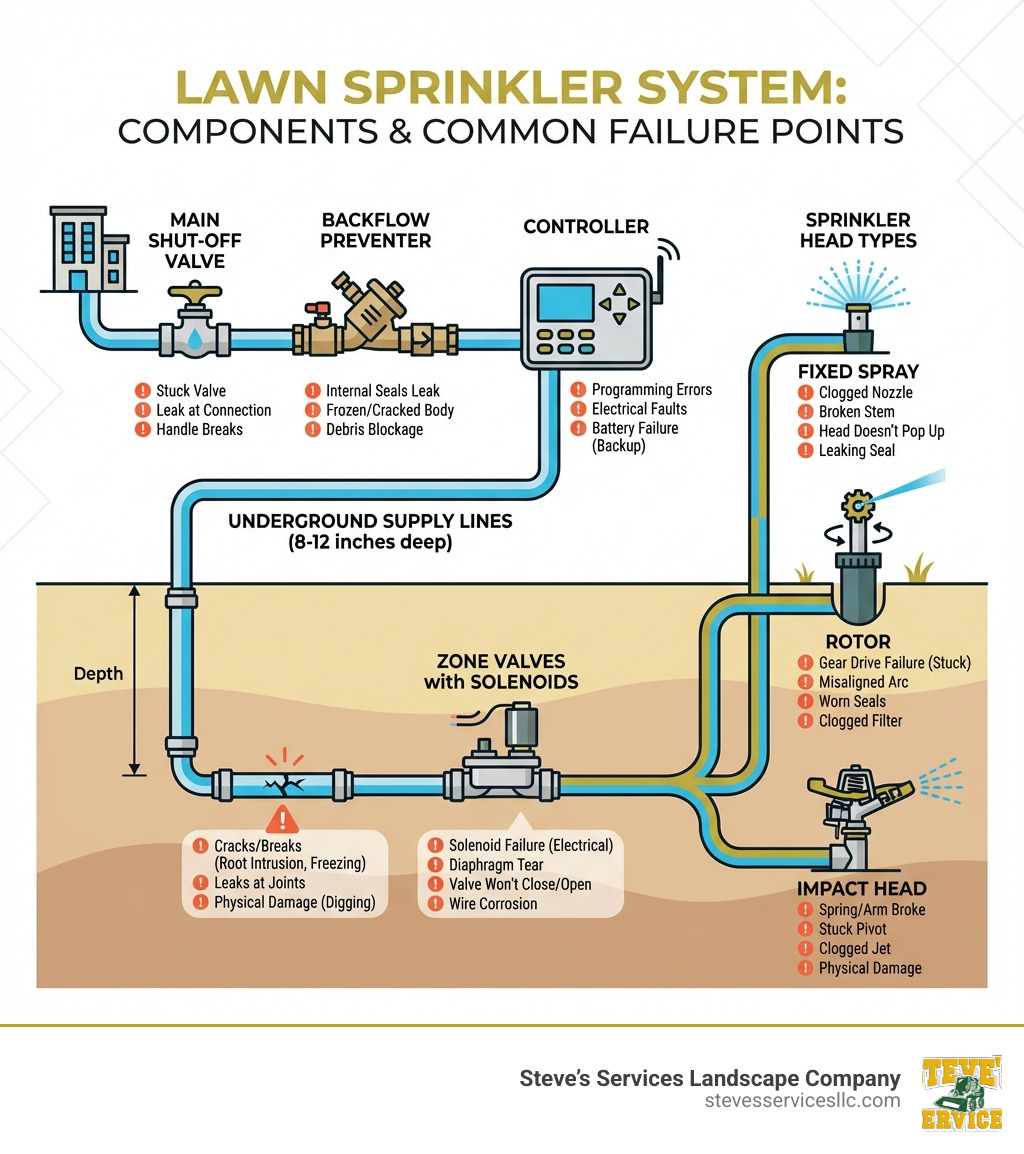
Understanding Sprinkler Components and Their Failures
To effectively fix lawn sprinkler problems, it helps to know your system’s anatomy. Each component plays a vital role, and when one fails, the entire system is affected. This knowledge helps us quickly pinpoint malfunctions. For a comprehensive overview, see our explanation of How do irrigation systems work?.
The key components are:
- Controller (Timer): The “brain” that schedules watering.
- Valves: The “gates” that control water flow to specific zones.
- Solenoids: Electrical activators on each valve.
- Pipes: The network that transports water.
- Heads: The nozzles that distribute water.
Understanding how these parts interact allows our team to troubleshoot efficiently, saving time and ensuring a precise repair.
Sprinkler Heads: Types, Damage, and Replacement Considerations
Sprinkler heads are the visible workhorses and come in several types:
- Fixed Spray Heads: Deliver a fan of water for smaller, irregular areas. Cost: $3 to $25.
- Rotor Sprinklers: Rotate to throw a stream of water over larger areas. Cost: $5 to $30.
- Impact Sprinkler Heads: Use a striking arm to distribute water, known for their “clacking” sound. Cost: $7 to $30.
Damage is often caused by lawnmowers, aerators, or vehicles. In Massachusetts, freeze damage from improper winterization is also a major factor. Water lines are typically buried 8 to 12 inches deep, but this isn’t always enough to prevent damage.
When replacing a head, using the correct type is crucial. As Jeff Watson of Bright Water Irrigation and Lighting notes, “if homeowners get the wrong one, the spray in that zone will be distributed unevenly.” A common mistake is mixing brands, like using a RainBird head in a Toro system. Matching the brand and type ensures even water distribution and system efficiency. Our professionals guarantee the correct replacement to prevent future imbalances.
Valves and Solenoids: The Heart of Zone Control
Valves and solenoids control the water flow to each zone.
- Zone Valves: Mechanical gates that open to let water into a specific zone’s pipes.
- Isolation Valves: Shut off water to the entire system for maintenance without affecting your home’s water supply.
- Solenoids: Small electrical components on each zone valve. They receive a signal from the controller to open the valve.
Signs of failure are often clear. A zone not turning on may indicate a faulty solenoid. Leaks around a valve box often point to a leaking valve. Given their critical role, professional diagnosis and replacement are highly recommended. Learn more with our guide on Sprinkler Valve Diaphragm Replacement.
The Brains of the Operation: Electrical Issues
Electrical issues can disrupt your entire watering schedule and are often difficult for homeowners to diagnose.
Common electrical problems include:
- Controller Settings: Incorrect programming or a forgotten “rain delay” can prevent operation.
- Power Issues: A tripped circuit breaker, loose plug, or faulty transformer can cut power. Transformers should supply 24-28 volts; less than 22 VAC indicates a need for replacement.
- Wiring Problems: Buried wires can be severed by digging, damaged by rodents, or degrade over time.
- Bad Connections: Loose or corroded wires at the controller or in the valve box can block signals.
When a zone fails, our professionals systematically check these components using tools like multimeters to test voltage and resistance, ensuring an accurate diagnosis and a lasting repair.
The Professional Approach to Fix Lawn Sprinkler Systems
While a DIY fix for your Massachusetts sprinkler might seem cost-effective, the system’s complexity often makes professional repair the most efficient and economical choice. At Steve’s Services, our professional approach ensures your system is restored correctly and safely.
Why is professional repair necessary?
- Safety First: We always contact 811 to locate underground utilities before digging, preventing dangerous and costly accidents.
- Specialized Tools: We use multimeters, wire trackers, and specialized pipe tools for accurate diagnostics and repairs.
- Correct Parts: We stock high-quality, durable components to ensure system performance and longevity.
- Efficiency: Our experience allows us to diagnose and fix problems quickly, minimizing disruption. For local expertise, find us for Irrigation System Repairs Near Me.
How Professionals Fix Lawn Sprinkler Line Leaks
Underground line leaks are among the trickiest problems to solve. While you might see a soggy patch, pinpointing the source requires a professional.
Our process for fixing line leaks:
- Locating Leaks: We use specialized listening devices to find the leak accurately without excessive digging.
- Safe Excavation: After 811 marks all utilities, we carefully dig to access the damaged pipe.
- Repair Methods: Depending on the pipe type, we use specific techniques like slip couplings and PVC solvent for PVC pipes to create strong, watertight bonds. For extensive damage, we replace larger sections, sometimes rerouting the line to avoid future issues.
Our goal is a durable, long-term solution. For more on this, visit our page on Repair Irrigation Tubing.
How Professionals Fix Lawn Sprinkler Low Pressure Issues
Low water pressure can leave your lawn patchy and dehydrated. Our professional approach ensures a thorough diagnosis and effective resolution.
Our process includes:
- System-Wide Inspection: We check the main water line and backflow preventer for hidden leaks or obstructions.
- Pressure Testing: Using gauges, we measure pressure at various points to identify where the drop occurs.
- Professional Solutions: Based on our findings, we implement targeted solutions:
- Adjusting Regulators and Valves: We ensure regulators are set correctly and all valves are fully open.
- Clog Removal: We clean any clogged filters, nozzles, or lines impeding water flow.
- System Upgrades: If the design is inadequate, we can recommend upgrades to optimize pressure and coverage.
Our expertise ensures your system runs at optimal pressure and uses water efficiently. Explore Irrigation System Upgrades: How to Save Money and Improve Efficiency with Steves Services for lasting improvements.
Essential Seasonal Maintenance to Prevent Problems
Regular maintenance is the key to a long-lasting, efficient sprinkler system in Massachusetts. Think of it as preventative care that saves you headaches and expense later.
The benefits of professional maintenance are clear:
- Extends System Life: A well-maintained system can last up to 20 years, protecting your investment.
- Saves Water: Efficient operation means lower water bills and less environmental impact.
- Prevents Costly Repairs: Catching minor issues early prevents them from becoming major breakdowns.
While monthly visual checks are helpful, professional seasonal inspections are vital. For more on keeping your system in top shape, explore our guide on Underground Sprinkler System Maintenance.
Spring Start-Up: Waking Up Your System Safely
After a long Massachusetts winter, your sprinkler system needs a careful awakening to prevent damage.
Our spring start-up service includes:
- Gradual Valve Opening: We slowly open the main water valve to prevent “water hammer,” a pressure surge that can damage pipes.
- Leak Checks: We thoroughly inspect the entire system for leaks that may have developed over winter.
- Zone Testing: Each zone is activated to ensure all heads pop up and rotate correctly.
- Head Adjustments: We inspect and adjust every head for proper spray patterns and coverage, ensuring water isn’t wasted.
- Controller Programming: We program your controller for optimal watering schedules based on seasonal needs.
A professional start-up ensures your system runs efficiently from day one. Learn more about this process in our resource on How to Turn On Irrigation System.
Fall Winterization: Protecting Your Investment from Freeze Damage
As cold weather approaches, fall winterization is the most critical maintenance task for your sprinkler system. Neglecting it can lead to catastrophic damage.
Why Winterization is Crucial:
Water left in pipes, valves, or heads will freeze, expand, and burst. This can damage not only pipes but also sensitive components like solenoids and backflow preventers, leading to expensive spring repairs.
Our professional winterization method involves:
- Shutting Off Water: The main water supply to the system is turned off.
- Professional Blowout Method: We use a large air compressor to force all remaining water out of the pipes, valves, and heads. This ensures the system is completely dry and safe from freeze damage, a method far superior to simple draining.
Don’t let the Massachusetts winter destroy your investment. Protect it with professional winterization. For information on potential repair costs, see our page on Cost to Repair Frozen Sprinkler System.
Understanding Sprinkler Repair Costs and When to Call a Pro
When your sprinkler system needs work, a common question is, “How much will this cost?” The cost to fix lawn sprinkler systems varies widely based on the problem.
On average, homeowners might spend around $270 for sprinkler repairs. However, this is just an average. Simple fixes like replacing a single head could be as low as $50, while complex issues like repairing broken underground pipes could reach $850 or more. For example, a new head might cost $10-$20 for the part, while valve box repairs could be $20-$90 in parts, plus labor. Please note that these are average costs based on internet data and not actual costs for Steve’s Services. Actual repair costs can vary significantly.
Factors influencing the final cost include:
- Type of Repair: Head replacements are less expensive than pipe repairs or electrical work.
- Extent of Damage: A single broken head is cheaper than a widespread leak.
- Parts Required: Specialized components cost more than standard parts.
- Labor: The time and expertise needed are significant cost factors.
For a more detailed breakdown, see our resource on How much does sprinkler system repair cost?.
DIY Troubleshooting vs. Professional Repair
It’s crucial to know the line between what a homeowner can observe and what requires professional intervention.
What Homeowners Can Check:
- Visual Inspections: Look for obvious signs like gushing water, dry spots, or broken heads.
- Controller Settings: Check if the timer is set correctly or if a rain delay is active.
When to Call a Professional:
For anything beyond simple observation, we strongly recommend calling Steve’s Services. Here’s why:
- Electrical Issues: Working with wiring and transformers is dangerous without proper training.
- Underground Leaks: Locating and repairing buried pipes requires specialized equipment and knowledge of utility line locations.
- Valve Problems: Diagnosing and repairing zone valves or backflow preventers is complex.
- Winterization: A professional blowout is essential to prevent freeze damage in Massachusetts.
Benefits of Hiring a Pro: include correct diagnosis, a warranty on parts and labor, and the peace of mind that the job is done right. When you need a reliable repair, contact us for a Sprinkler Repair Estimate.
Tools of the Trade: What the Pros Use
A skilled technician needs the right tools. Our team is equipped with more than just a shovel.
Common professional tools we use:
- Multimeter: For diagnosing all electrical issues.
- PVC Cutters: For clean, precise cuts on pipes.
- Wire Trackers: To locate buried wires without extensive digging.
- Valve Keys: For manually operating buried valves.
- Compression Tools: For secure, watertight pipe repairs.
- Air Compressors: For powerful and safe winterization blowouts.
- Pressure Gauges: To accurately measure water pressure.
These specialized tools allow us to work with precision, efficiency, and safety, ensuring a durable repair.
Frequently Asked Questions about Sprinkler Repair
How often should I have my sprinkler system inspected?
We recommend homeowners perform a quick visual inspection monthly during the watering season, looking for soggy spots or damaged heads. For a thorough assessment, professional inspections are crucial. We advise scheduling a professional spring start-up to prepare your system for the season and a fall winterization to protect it from freeze damage. These seasonal checks are vital for system health and longevity.
What’s the most common cause of a sprinkler system failing?
In our experience in Massachusetts, the most common failures are:
- Broken or Clogged Heads: Often from physical damage (lawnmowers) or freeze damage.
- Leaks: Occurring in heads, valves, or underground pipes due to wear, root intrusion, or freezing.
- Faulty Valves or Solenoids: These components can fail, causing zones to stop watering.
- Electrical Issues: Problems with the controller, wiring, or transformer can disable the system.
Can a small leak really cause a big problem?
Yes, absolutely. A small leak wastes a significant amount of water, driving up your bills. The constant moisture creates unhealthy, soggy turf susceptible to disease, while nearby areas are deprived of water. A small leak can also signal an impending component failure, leading to a much larger, more expensive repair if ignored. Prompt professional repair of any leak is crucial for your lawn’s health and your system’s efficiency. For more on addressing leaks, see information on How to Fix a Sprinkler Leak .
Conclusion
Managing your lawn sprinkler system doesn’t have to be stressful. A well-maintained system is the key to a healthy lawn, conserving water and protecting your landscaping investment. Recognizing early signs of trouble, understanding the components, and knowing when to call an expert are crucial for keeping your system running smoothly.
While some issues seem minor, the specialized knowledge and tools required for safe, effective repairs make professional service the most reliable and cost-effective solution. At Steve’s Services, we are committed to providing top-tier fix lawn sprinkler solutions across Massachusetts, from Burlington to Stoneham. Our team’s expertise ensures your system performs optimally, saving you water, money, and frustration.
For expert help with your Sprinkler System Repair, contact us today. Let us handle your watering woes so you can enjoy a beautiful, lush lawn.
