
Why a backflow preventer sprinkler system leaking Is a Problem You Shouldn’t Ignore
A backflow preventer sprinkler system leaking is one of the most common irrigation issues homeowners face — and it can mean anything from normal pressure relief to a serious component failure that risks your drinking water.
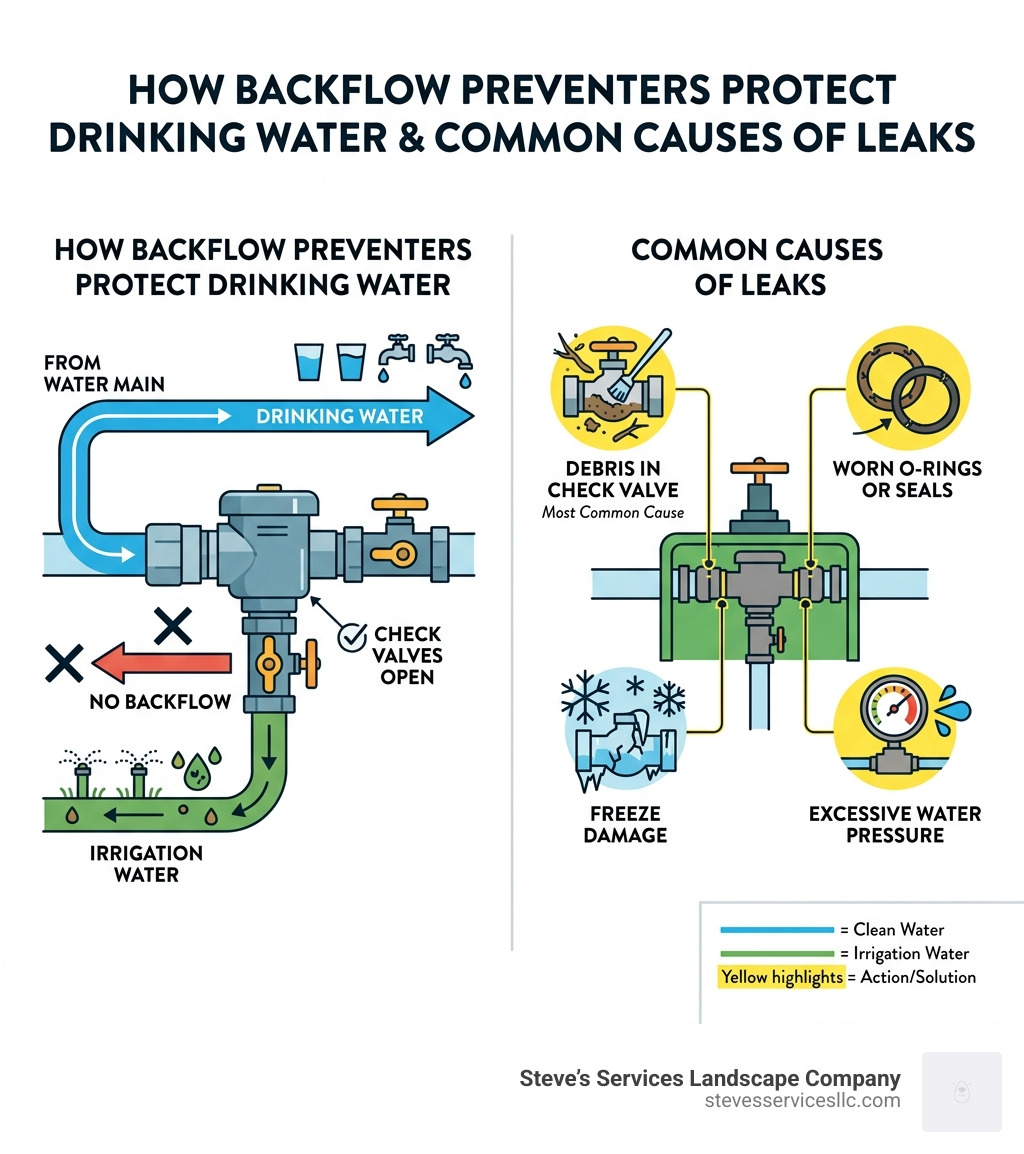
Here’s a quick summary of the most common causes and fixes:
| Cause | What to Do |
|---|---|
| Debris in check valve | Have the valve cleaned or rebuilt by a pro |
| Worn O-rings or seals | Schedule a seal replacement |
| Freeze damage | Inspect for cracks; may need full replacement |
| Excessive water pressure | Install a pressure regulator |
| Leaking indoor shut-off valve | Repair or replace the upstream valve |
| Normal pressure relief drip | Monitor; no action needed if intermittent |
Backflow preventers are a critical part of any sprinkler system. They stop contaminated irrigation water from flowing backward into your clean drinking water supply. When they start leaking — whether it’s a slow drip or a steady stream — it’s a signal worth taking seriously.
In fact, debris lodged in the first check valve is the cause of leaks roughly 9 times out of 10. But freezing temperatures, aging seals, and water pressure spikes are close behind.
The good news? Most leaks are fixable. The key is knowing what you’re dealing with.
I’m Steve Sylva, owner of Steve’s Services, and with over 25 years of hands-on irrigation experience in Massachusetts, I’ve seen nearly every type of backflow preventer sprinkler system leaking scenario — from post-winterization drips to cracked assemblies after a hard freeze. In the sections below, I’ll walk you through exactly how to identify what’s happening with your system and what to do next.
Backflow preventer sprinkler system leaking terms you need:
Understanding Why Your Backflow Preventer Sprinkler System Leaking Occurs
To understand why your device is leaking, we first have to understand what it actually does. Think of your backflow preventer as a one-way security gate for your water. In a healthy system, water flows from the city main, through your pipes, and out of your sprinkler heads.
However, pressure changes — like a water main break down the street in Medford or high demand from a nearby fire hydrant — can cause “back-siphonage.” Without a preventer, the water sitting in your yard (which might contain fertilizers, pesticides, or pet waste) could be sucked backward into your home’s faucets.
A backflow preventer uses a series of internal check valves and springs to ensure water only moves in one direction. When these internal parts fail or become obstructed, you end up with a backflow preventer sprinkler system leaking. This isn’t just a plumbing nuisance; it’s a public health safeguard, as outlined by the Environmental Protection Agency (EPA). If you notice a leak, it means the “gate” might not be closing properly, which is why we often recommend a professional Sprinkler System Repair to ensure your family’s water remains untainted.
When a Backflow Preventer Sprinkler System Leaking Requires Immediate Attention
Not all leaks are created equal. If you see a few drops here and there, you might have time to finish your coffee before calling us. However, certain signs indicate a “Level 1” emergency.
If you notice a continuous stream of water gushing from the relief port or the bell cap, your system is likely experiencing a major mechanical failure. This isn’t just wasting water; it can lead to significant pooling around your foundation, potentially causing basement dampness or structural issues over time. If the water is gushing, the first step is to locate your main irrigation shut-off valve (usually found in the basement or near the water meter) and close it immediately. Once the water is off, you can consult our guide on Irrigation System Troubleshooting Common Issues And Solutions For A Healthy Lawn to help identify the specific failure point before a technician arrives.
Normal Operation vs. Mechanical Failure
One of the most common calls we get in towns like Winchester and Stoneham is from homeowners worried about a “burp” of water. It is important to distinguish between a device that is broken and a device that is simply doing its job.
| Feature | Normal Operation | Mechanical Failure |
|---|---|---|
| Drip Frequency | Occasional “spit” or “burp” during zone changes. | Constant, steady dripping or a continuous stream. |
| Relief Port | Brief discharge when system pressure fluctuates. | Water dumping out even when the system is off. |
| Air Inlet | Small puff of air or mist when the system starts. | Water gushing from the top cap (bonnet). |
| Visual Signs | Dry exterior most of the time. | Visible rust, corrosion, or mineral “crust” around seams. |
Pressure spikes in the municipal water line can cause an RPZ (Reduced Pressure Zone) assembly to spit water from the relief port. This is actually the device protecting itself. However, if that spitting turns into a persistent puddle, the internal seals have likely failed.
Common Causes of Backflow Device Failure
In our 25+ years serving the Malden area, we’ve found that backflow preventers usually don’t fail without a reason. These devices are rugged, but they are sensitive to the environment.
Common culprits include:
- Mineral Buildup: In areas with “hard” water, calcium and magnesium can form a crusty layer on the internal rubber seals. This prevents the valves from seating perfectly.
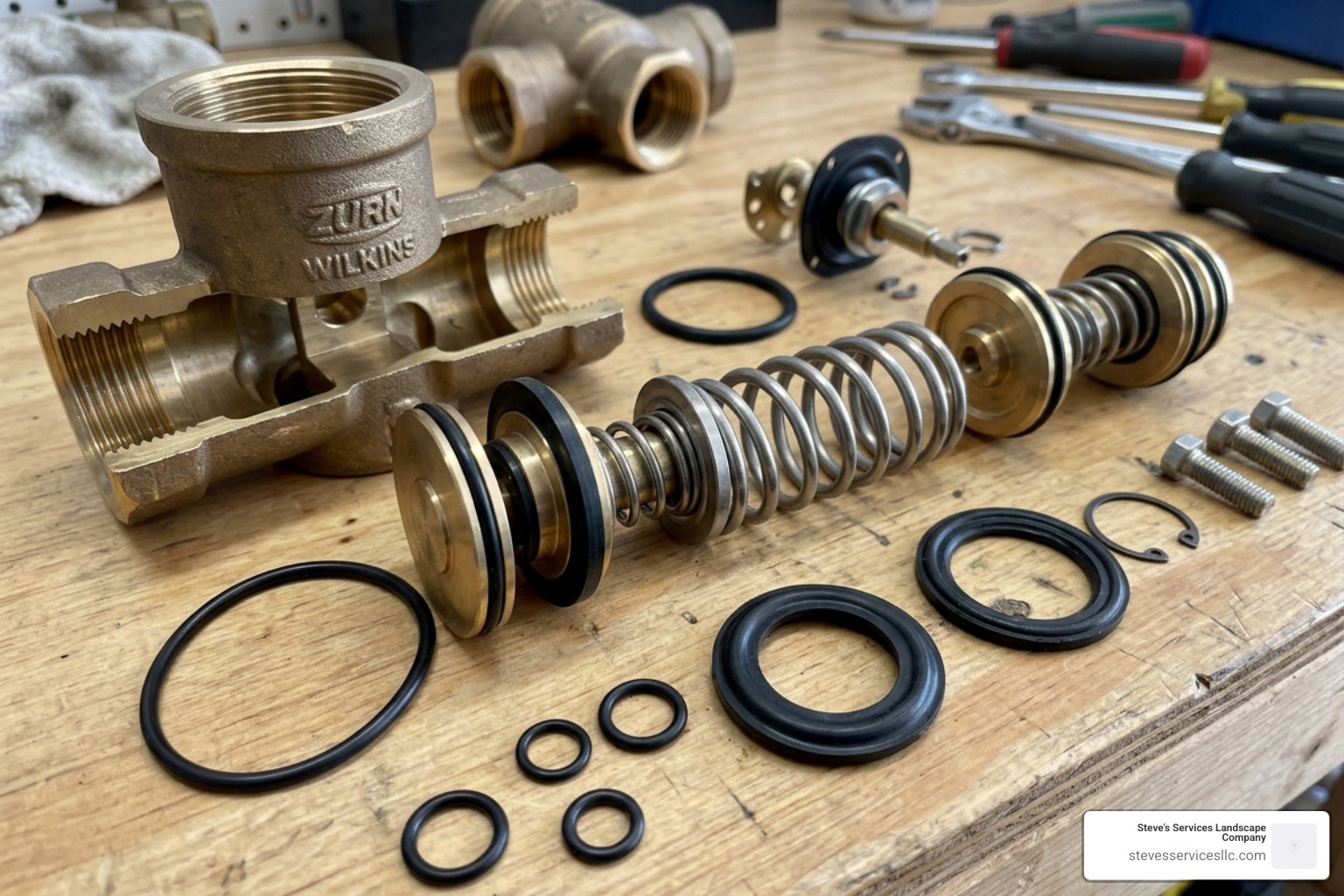
- O-ring Wear: Like any rubber component, O-rings eventually dry out or crack. Most backflow prevention devices have a lifespan of 5 to 10 years before the rubber components need a complete overhaul.
- Water Hammer: If your pipes make a loud “thud” when the sprinklers turn off, that’s water hammer. This sudden shockwave of pressure can literally tear the internal diaphragms of your backflow preventer.
- Thermal Expansion: If you recently installed a new water heater, you might notice your backflow preventer leaking more often. As the water heater warms up, the water expands. If there isn’t an expansion tank to take up the slack, that pressure pushes back against the check valves.
If you suspect your valve has been compromised by the elements, especially during our harsh Massachusetts winters, check out our resource on the Frozen Sprinkler Backflow Valve.
How Debris Leads to a Backflow Preventer Sprinkler System Leaking
We mentioned it earlier, but it bears repeating: Debris in the first check valve causes leaks 9 times out of 10.
Even a tiny grain of sand or a small piece of PVC plastic from a recent pipe repair can get wedged in the seal. Because the seal can’t close all the way, water “weeps” past it. This often happens after city water main work or if you’ve recently had a Sprinkler System Repair Near Me that introduced sediment into the lines. Flushing the system can sometimes clear this, but usually, the device needs to be opened and cleaned by a professional who knows how to reassemble the high-tension springs safely.
The Impact of Freezing and Improper Winterization
In the Greater Boston area, the biggest enemy of the backflow preventer is ice. If even a small amount of water is left inside the brass body over the winter, it will expand as it freezes. This often results in hairline cracks in the metal or shattered plastic “poppets” and “bonnets” inside the device.
Interestingly, we often see a backflow preventer sprinkler system leaking after the system has been winterized. This is a head-scratcher for many homeowners. If the system is “empty,” why is it dripping?
The answer is usually a leaking indoor shut-off valve. If the valve in your basement doesn’t seal 100%, a tiny amount of water continues to pressurized the line. That water travels up to the backflow preventer, freezes, and causes damage, or simply leaks out of the bell cap. This is why Fix Lawn Sprinkler System issues before the first frost hits.
Professional Solutions for a Leaking Backflow Preventer
Because these devices are tied directly to your clean water supply, repairs are not a weekend DIY project. In many of the communities we serve, such as Medford and Reading, local codes require that backflow preventers be tested and maintained by certified technicians.
Professional service typically includes:
- Certified Testing: Using specialized gauges to measure the pressure differential across the check valves.
- Cleaning: Removing the internal “guts” to clear out sand, silt, and mineral deposits.
- Lubrication: Applying food-grade silicone grease to O-rings to extend their life.
Regular Lawn Sprinkler System Maintenance is the best way to prevent a mid-summer emergency.
Repair vs. Replacement Considerations
When we encounter a backflow preventer sprinkler system leaking, we always look to see if a “rebuild” is possible. Most major brands offer rebuild kits that include new springs, bonnets, and poppets.
However, replacement is necessary if:
- The Body is Cracked: If the brass housing is split from freezing, it cannot be repaired.
- The Device is Obsolete: If parts are no longer manufactured for your 20-year-old valve, a new unit is the only safe path.
- Frequent Failures: If we are out at your property in Saugus or Wakefield every few months for the same leak, the internal seats are likely pitted or corroded, making a new installation more cost-effective in the long run.
For more details on the financial side, read our breakdown on Sprinkler Backflow Preventer Replacement Cost.
Estimated Costs for Backflow Repair and Replacement
When budgeting for repairs, keep in mind that these figures are average costs based on internet data and not actual quotes for Steve’s Services. Prices in the Massachusetts market can vary based on the size of the device (1-inch vs. 2-inch) and the complexity of the plumbing.
- Minor Seal/Gasket Repair: $150 – $450
- Includes cleaning the device and replacing rubber O-rings or the washer seal.
- Internal Component Rebuild (Bonnet & Poppet): $250 – $750
- Includes replacing the “moving parts” inside the vacuum breaker.
- Full Device Replacement: $600 – $1,800+
- Includes the cost of a new brass assembly, labor, and the required certification testing.
For a deeper dive into irrigation pricing, see How Much Does Sprinkler System Repair Cost.
Frequently Asked Questions
Why is my backflow preventer leaking after winterization?
This is usually caused by a “passing” indoor shut-off valve. If the main valve inside your house is old or has a worn washer, it allows a slow trickle of water into the outdoor line. This water has nowhere to go but out through the backflow’s relief vent. It’s a sign you need to Fix Lawn Sprinkler components inside the house as well as outside.
How often should my backflow preventer be tested?
In most jurisdictions, including many in the North Shore and Greater Boston area, annual testing is a legal requirement. Even if not mandated by your specific town, we recommend a yearly check-up to ensure your drinking water remains safe. Regular Irrigation System Maintenance catches small leaks before they become $1,800 replacement bills.
Can I use my water while the backflow is leaking?
If the leak is a small, external drip, your indoor water is likely safe for the short term. However, a leaking backflow preventer means the “fail-safe” is compromised. If a pressure drop occurs in the city lines while you are using your water, there is a risk of contamination. It is always best to isolate the system and call a pro. If you’re in a bind, we offer 24 Hour Sprinkler Repair for those urgent situations.
Conclusion
A backflow preventer sprinkler system leaking is more than just a waste of water; it’s a signal that your home’s protection against contamination is at risk. Whether it’s a simple case of trapped North Reading sand in a check valve or a more serious freeze-crack in Woburn, addressing the issue early will save you money and stress.
At Steve’s Services, we’ve spent decades helping our neighbors in Malden, Medford, Winchester, and throughout the surrounding communities keep their lawns green and their water clean. From Irrigation System Repairs Near Me to comprehensive Underground Sprinkler System Maintenance, our team has the tools and expertise to handle any backflow challenge.
Don’t let a small drip turn into a flooded basement or a contaminated water supply. If you’re seeing water where it shouldn’t be, give us a call. We’ll get your system back in flow and your mind at ease.
