
Why a Healthy Summer Lawn Matters
Summer lawn feeding is the practice of applying fertilizer to your grass during the warmer months to maintain health, color, and resilience against heat stress and drought. Here’s what you need to know:
Key Points About Summer Lawn Feeding:
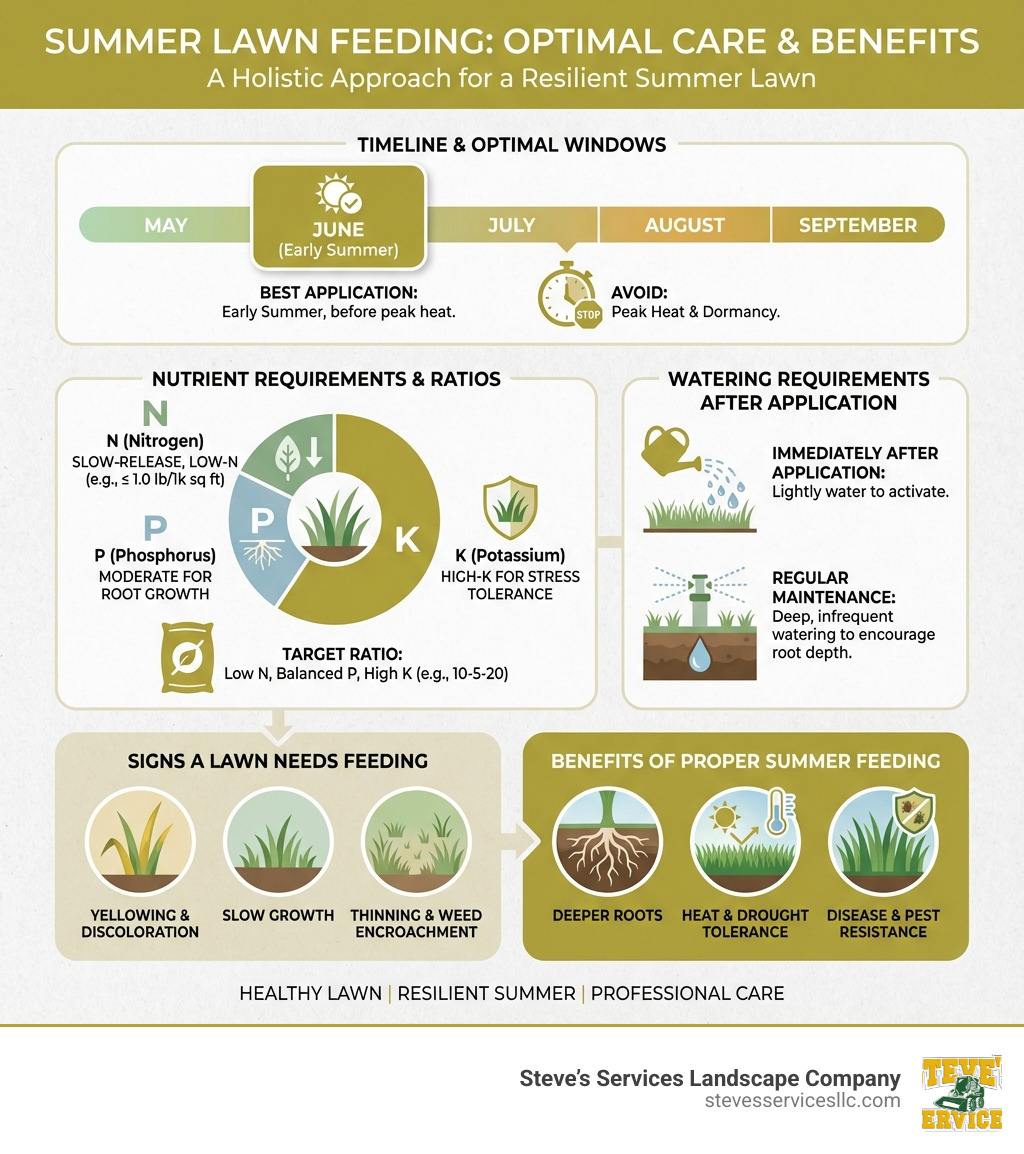
- Best Timing: Early summer (June) is ideal; avoid peak heat in July/August
- Fertilizer Type: Use slow-release, low-nitrogen formulas with potassium for stress tolerance
- Application Rate: Never apply more than 1.0 lb of nitrogen per 1,000 square feet at once
- Frequency: Feed every 6-8 weeks if your lawn stays green and actively growing
- Critical Rule: Stop feeding if your lawn goes dormant (turns brown) during heat or drought
Summer in Massachusetts brings intense heat, limited rainfall, and increased foot traffic—all of which stress your lawn significantly. Your grass plants are constantly working to repair damage from mowing, compete with weeds for resources, and survive temperature extremes. Without proper nutrition, lawns become thin, discolored, and vulnerable to disease and pest damage.
The challenge is that summer feeding requires a different approach than spring. Cool-season grasses like Kentucky bluegrass and tall fescue—the types common in our region—need careful, strategic feeding to build deeper root systems and withstand stress without triggering excessive growth during the hottest months. Research shows that properly timed summer fertilization helps lawns develop heat and drought resistance while maintaining that deep green color homeowners expect.
As Steve Sylva, owner of Steve’s Services with over 25 years of landscape experience in the Malden and Everett, MA area, I’ve seen countless lawns struggle through summer due to improper or mistimed feeding. Professional summer lawn feeding requires understanding your specific grass type, soil conditions, and the unique climate challenges we face here in Massachusetts.
Summer lawn feeding terms to know:
The “When” and “What” of Summer Lawn Feeding
For homeowners in Massachusetts, understanding the specific needs of our cool-season grasses during the summer is paramount. Unlike warm-season grasses that thrive in intense heat, our lawns can become stressed and go dormant if not cared for correctly. This means our approach to summer lawn feeding must be precise and strategic, focusing on building resilience rather than promoting vigorous growth.
Our climate, with its hot and often dry summers, requires us to pay close attention to nutrient requirements. We want to provide the right balance of nutrients to help grass roots grow deep, resist drought, and maintain a healthy color without encouraging rapid top growth that can deplete energy reserves. This is where professional knowledge comes into play, ensuring your lawn gets exactly what it needs, when it needs it, to survive and thrive through the challenging summer months.
How to Tell if Your Lawn Needs a Summer Feed
Just like us, our lawns send out signals when they’re hungry or stressed. Learning to read these signs is the first step in effective summer lawn feeding.
- Yellowing Grass (Chlorosis): If your lawn is losing its vibrant green color and turning yellowish, it could be a sign of nutrient deficiency, often nitrogen or iron.
- Slow or Stunted Growth: While we don’t want explosive growth in summer, a complete halt in growth or stunted blades can indicate a lack of essential nutrients.
- Increased Weed Presence: A thin, undernourished lawn is an open invitation for weeds to take over. Healthy, dense turf naturally crowds out unwanted invaders.
- Thinning Patches: Areas where the grass is sparse or dying off suggest that your lawn isn’t getting the sustenance it needs to maintain its density.
- Visible Signs of Stress: This might include grass blades that don’t spring back after being walked on, or a general dull appearance.
While these visual cues are helpful, the most accurate way to truly know what your lawn needs is through a professional soil analysis. A soil test provides a detailed report of your soil’s current nutrient levels and pH, allowing us to create a custom fertilization plan custom to your lawn’s exact requirements. This scientific approach prevents over or under-fertilization, saving you money and ensuring optimal lawn health.
Optimal Timing for Summer Lawn Feeding
Timing is everything when it comes to summer lawn feeding, especially for cool-season grasses in Massachusetts. The goal is to strengthen your lawn before the most intense heat hits, not during it.
- Early Summer (June): This is generally the sweet spot for a summer lawn feeding. Applying a fertilizer in early June helps prepare your lawn for the stress of July and August. It replenishes nutrients depleted by spring growth and frequent mowing, allowing your grass to build stronger roots and increase its resistance to heat and drought.
- Avoiding Peak Heat (July/August): For cool-season grasses, we generally recommend avoiding heavy fertilization during the hottest parts of July and August. Applying nitrogen-rich fertilizers when temperatures are consistently high can force grass to grow when it naturally wants to slow down. This can lead to stress, disease, and even fertilizer burn. If your lawn is actively growing and not showing signs of dormancy, a very light, slow-release application might be considered, but caution is key.
- Temperature Guidelines: Ideal temperatures for fertilizing cool-season grasses are typically when daytime highs are consistently below 85°F. If a heatwave is predicted, it’s best to postpone any feeding.
- Applying Before Drought Conditions: A well-fed lawn has deeper roots, which are better at seeking out water underground. Fertilizing in early summer can help your lawn store energy and develop this deeper root system, making it more resilient if drought conditions arise.
For more detailed information on selecting the right products for this period, you can explore more info about lawn feed fertilizer.
Choosing the Right Professional-Grade Fertilizer
Not all fertilizers are created equal, and selecting the correct type for summer lawn feeding is crucial for the health of your cool-season grass. Our professional approach focuses on supporting your lawn’s resilience rather than pushing aggressive growth.
- Slow-Release Nitrogen: This is the hero of summer fertilizers for cool-season grasses. Instead of a rapid burst of nutrients, slow-release formulas provide a steady, consistent feed over several weeks. This prevents sudden growth spurts that stress the grass in heat, reduces the risk of fertilizer burn, and minimizes nutrient runoff. Nitrogen is the primary nutrient turfgrass needs regularly, but in summer, slow and steady wins the race.
- Low-Nitrogen Formulas: While nitrogen is essential, excessive amounts in summer can be detrimental. We often opt for formulas with a lower nitrogen content to avoid overstimulating growth during stressful periods.
- Potassium for Stress Tolerance: Often overlooked, potassium (K) is vital for strengthening grass plants. It helps improve the lawn’s resistance to heat, drought, and disease. Research indicates that a fertilizer high in potassium is particularly beneficial for preparing grass for harsh conditions.
- Iron for Deep Greening: If your lawn is looking a bit pale, an iron supplement can give it a beautiful, deep green color without promoting excessive growth. This is a great way to achieve that lush look without over-fertilizing with nitrogen.
- N-P-K Ratios Explained: Fertilizer bags display three numbers, like 10-0-10 or 20-5-10. These represent the percentage by weight of Nitrogen (N), Phosphorus (P), and Potassium (K) in the bag. For summer, we typically look for a higher K ratio and a balanced or lower N ratio for cool-season grasses. Phosphorus (P) is often not needed for established lawns in our region unless a soil test indicates a deficiency. For instance, a 10-0-10 or 7-0-20 blend might be suitable, emphasizing potassium for stress tolerance and a moderate amount of slow-release nitrogen.
- Granular vs. Liquid Applications: Granular fertilizers are common for slow-release applications, offering a consistent feed over time. Liquid applications can provide a quicker green-up but require more frequent application and careful attention to avoid burn. For most summer lawn feeding in Massachusetts, we favor granular, slow-release options for their sustained benefits and reduced risk.
For more in-depth guidance on specific nutrient requirements, you can refer to general University Fertilizer Recommendations. Tailoring the fertilizer to your specific lawn and local conditions is key, and a professional can provide that expertise.
Integrating Fertilization with Total Summer Lawn Care
Effective summer lawn feeding isn’t a standalone task; it’s a piece of a larger, holistic summer lawn care puzzle. Fertilization works best when integrated with proper mowing and watering techniques. At Steve’s Services, we view your lawn as an ecosystem, and every action we take contributes to its overall health and resilience.
The Critical Role of Watering
Watering is inextricably linked to successful summer lawn feeding. It’s not just about keeping the grass alive; it’s about helping the nutrients reach where they need to go and preventing damage.
- Deep and Infrequent Watering: This is the golden rule of summer watering. Instead of light, daily sprinkles, aim for deep watering (about 1 inch per week, including rainfall) that penetrates 6-8 inches into the soil. This encourages deeper root growth, making your lawn more drought-tolerant. Research suggests approximately 20 to 25 liters of water per square meter per week is a good starting point. Frequent, shallow watering can cause roots to stay near the surface, making the lawn vulnerable to stress and thatch buildup.
- Morning Watering Schedules: The best time to water your lawn is in the early morning, typically between 4 AM and 9 AM. This allows the grass blades to dry before the midday sun, minimizing evaporation and reducing the risk of fungal diseases. Watering in the late evening can leave grass wet overnight, creating an ideal environment for diseases.
- Watering After Fertilization: This step is absolutely critical. After applying granular fertilizer, we always recommend watering it in. This helps dissolve the granules, moving the nutrients from the grass blades down into the soil where the roots can absorb them. It also prevents the fertilizer from sitting on the grass blades, which can lead to fertilizer burn.
- Preventing Fertilizer Burn: If fertilizer sits on dry grass blades, especially during hot weather, it can “burn” the foliage, leaving unsightly brown streaks or patches. Proper watering immediately after application washes the fertilizer off the blades and into the soil, significantly reducing this risk.
- Avoiding Runoff: Deep, infrequent watering also helps prevent runoff. If water is applied too quickly or in excessive amounts, it can run off your lawn, carrying valuable nutrients with it into storm drains and local waterways. This is not only wasteful but can also contribute to environmental pollution.
For those considering an automated solution to ensure consistent watering, more info about lawn sprinkler systems can be found on our site.
Mowing High for Summer Resilience
How you mow your lawn can dramatically impact its ability to withstand summer stress. We advocate for a “mow high” strategy during the warmer months.
- Benefits of Taller Grass: Taller grass blades offer several advantages in summer. They help to shade the soil, keeping it cooler and reducing soil moisture evaporation. This means you’ll need to water less, which is a win-win for your wallet and the environment.
- Promoting Deeper Roots: Taller grass encourages the development of deeper, stronger root systems. These extensive roots are better equipped to access water and nutrients deep within the soil, making your lawn more resilient to drought and heat.
- Reducing Water Evaporation: By shading the soil, taller grass acts like a natural mulch, slowing down the rate at which water evaporates from the soil surface. This keeps the root zone consistently moist for longer periods.
- Ideal Mowing Height: For cool-season grasses in Massachusetts, we recommend maintaining a mowing height of 3-4 inches during the summer. Never remove more than one-third of the grass blade’s height at any single mowing.
- Sharp Mower Blades: Always use sharp mower blades. Dull blades tear the grass, leaving ragged edges that are more susceptible to disease and stress, especially in hot weather. A clean cut promotes quicker healing and healthier grass.
How Often Should a Lawn Be Fed in Summer?
The frequency of summer lawn feeding largely depends on your lawn’s specific needs, the type of fertilizer used, and whether your grass remains actively growing.
- Typical 6-8 Week Intervals: If your cool-season lawn is actively growing and staying green through the summer, and you’re using a slow-release fertilizer, a feeding every 6-8 weeks is a general guideline. This ensures a continuous supply of nutrients without over-application. However, we also know that aggressive summer feeding for cool-season grasses is best avoided.
- Adjusting Based on Lawn Health: The most important factor is observing your lawn. If it’s thriving, a less frequent application might be sufficient. If it’s showing signs of stress or nutrient deficiency, we might adjust the timing.
- Following a Professional Schedule: The best way to determine the optimal feeding schedule is to work with professionals like Steve’s Services. We can assess your lawn’s specific needs, soil type, and grass variety, then create a customized summer lawn feeding plan that ensures it receives the right nutrients at the right time. Our lawn fertilizer service takes the guesswork out of summer lawn care.
Avoiding Common and Costly Summer Fertilizing Mistakes
Even with the best intentions, mistakes in summer lawn feeding can be costly, both for your lawn’s health and your wallet. Understanding these pitfalls is key to protecting your investment and ensuring a beautiful landscape.
The Dangers of Improper Application
Improper fertilization during summer can turn your efforts into a nightmare for your lawn.
- Fertilizer Burn: This is perhaps the most common and visible mistake. Fertilizer burn occurs when too much fertilizer is applied, or it’s applied incorrectly (e.g., on wet grass, in scorching heat, or without watering it in). The concentrated salts in the fertilizer draw moisture out of the grass, causing it to dehydrate and turn brown or yellow. Fast-release fertilizers are particularly prone to causing burn if not handled carefully.
- Uncontrolled Growth Spurts: Applying too much nitrogen, especially a fast-release type, can force cool-season grass into rapid growth during summer. This depletes the grass’s energy reserves, making it weaker and more susceptible to heat stress, drought, and disease. It’s like asking a marathon runner to sprint in the middle of their race on a hot day – it’s unsustainable and damaging.
- Increased Disease Susceptibility: A stressed lawn is a vulnerable lawn. Over-fertilization, especially with nitrogen during summer, can create conditions favorable for certain lawn diseases to flourish.
- Environmental Impact of Runoff: If fertilizer isn’t properly watered into the soil or is applied right before a heavy rain, it can wash off your lawn and into storm drains. This runoff carries excess nutrients into local water bodies, leading to algal blooms and harming aquatic ecosystems. Choosing eco-friendly lawn treatment options and proper application techniques are crucial to minimize this impact.
The Question of Fertilizing Dormant Lawns
One of the most critical rules of summer lawn feeding for cool-season grasses is knowing when to stop.
- Identifying Dormancy (Brown but Not Dead): During prolonged heat and drought, cool-season grasses often enter a state of dormancy. This means the grass turns brown, but the crown of the plant is still alive, conserving energy until conditions improve. It’s a survival mechanism, not a sign of death. You can test for dormancy by pulling on a few brown blades; if they come out easily, the grass is likely dead, but if they resist, it’s probably dormant.
- Why to Pause Feeding: When your lawn is dormant, it’s not actively growing or absorbing nutrients. Applying fertilizer at this time is a waste of product and money. Worse, it can cause severe fertilizer burn, as the grass isn’t taking up the nutrients, leaving them to sit on the surface in high concentration. It’s like force-feeding someone who’s sleeping – not effective and potentially harmful.
- Protecting Grass Crowns: The grass crown is the vital part of the plant where new growth originates. During dormancy, protect this area. Fertilizing a dormant lawn can damage the crown, preventing the grass from recovering when cooler, wetter weather returns.
- When to Resume Fertilization in Early Fall: Once temperatures cool and natural rainfall resumes, your dormant lawn will typically begin to green up. This is the ideal time to resume fertilization, helping the grass recover from summer stress and prepare for the winter ahead. Our landscape maintenance services can help you identify these critical moments.
Frequently Asked Questions about Summer Lawn Feeding
We often hear similar questions from homeowners across Massachusetts about how to care for their lawns during the summer. Here are some of the most common ones we address:
Can I use the same fertilizer in summer as I do in spring?
While it might seem convenient, using the same fertilizer for all seasons is generally not recommended, especially for cool-season grasses. Each season presents unique challenges and opportunities for your lawn, requiring different nutrient balances.
- Different Seasonal Needs:
- Spring Fertilizers: These are typically higher in nitrogen to boost vigorous growth and green-up after winter. They focus on encouraging leaf development.
- Summer Fertilizers: For cool-season grasses, summer lawn feeding emphasizes resilience. We look for slow-release, lower-nitrogen formulas with a higher potassium content. Potassium helps the grass withstand heat, drought, and disease. Some summer blends may also include iron for color without excessive growth.
- Fall Fertilizers: These are crucial for recovery from summer stress and for building strong roots for winter. Fall formulas often have balanced N-P-K ratios or are higher in potassium, preparing the lawn for dormancy and a strong spring return. You can learn more info about fall fertilizer on our site.
- The “Why”: Using a high-nitrogen spring fertilizer in the peak of summer can force your cool-season grass to grow when it should be conserving energy, leading to stress and potential burn. Think of it as giving a heavy meal to someone who needs light sustenance during a heatwave.
Is organic summer lawn feeding an effective option?
Absolutely! Organic summer lawn feeding is an increasingly popular and highly effective option, offering numerous benefits for your lawn and the environment.
- Slow Nutrient Release: Organic fertilizers, derived from natural sources like compost, manure, or plant-based meals, typically release nutrients slowly. This slow, steady feed is ideal for summer, preventing the rapid growth spurts and burn potential associated with synthetic fast-release products.
- Improved Soil Health: Organic materials feed the beneficial microorganisms in your soil, enhancing soil structure, water retention, and overall soil health. A healthy soil ecosystem translates to a healthier, more resilient lawn that can better handle summer stress.
- Lower Risk of Burning: Due to their slow-release nature and lower salt content, organic fertilizers have a significantly reduced risk of causing fertilizer burn, even during warmer temperatures.
- Building Long-Term Resilience: By nurturing the soil and providing balanced nutrition, organic feeding helps your lawn develop stronger, deeper roots and a natural defense against pests and diseases, building long-term resilience rather than just a quick green-up.
- Professional Organic Programs: At Steve’s Services, we offer professional organic lawn care programs custom to the unique needs of lawns in Massachusetts. These programs leverage the power of natural inputs to create a beautiful, sustainable, and healthy lawn.
How soon after fertilizing will my lawn look greener?
The time it takes for your lawn to show results after summer lawn feeding depends primarily on the type of fertilizer used and how quickly the nutrients become available to the grass.
- Immediate vs. Slow-Release Formulas:
- Fast-Release (Synthetic): If a fast-release nitrogen fertilizer (which we generally avoid for cool-season grasses in peak summer) were applied, you might see a noticeable green-up within a few days to a week. This is because the nutrients are immediately soluble and available.
- Slow-Release (Synthetic or Organic): With the slow-release fertilizers we recommend for summer, the greening process is more gradual. You typically start to see results within 7-14 days, with the full benefits unfolding over several weeks as the nutrients are steadily released.
- Role of Iron: If your chosen summer fertilizer includes iron, you might see a quicker visual improvement in color, often within a few days. Iron provides that deep green hue without stimulating excessive growth.
- Impact of Watering: Proper watering after fertilization is crucial for activating the fertilizer and helping nutrients penetrate the soil. If the lawn isn’t watered adequately, the fertilizer won’t be as effective, and results will be delayed.
- Typical Results Timeline: For a well-managed lawn receiving a slow-release summer lawn feeding, you can generally expect to see a gradual, healthy greening and increased vitality within one to two weeks, with sustained benefits over the following month or two.
Trust the Experts for a Flawless Summer Lawn
Navigating the nuances of summer lawn feeding and overall lawn care can feel overwhelming. Between understanding grass types, N-P-K ratios, watering schedules, and local climate challenges, it’s a lot to manage. That’s where Steve’s Services comes in.
With over 25 years of experience serving communities like Burlington, Danvers, Everett, Lynnfield, Medford, Melrose, Malden, North Reading, Reading, Revere, Saugus, Stoneham, Wakefield, Winchester, and Woburn, MA, we are intimately familiar with the unique demands of our local landscapes. Our skilled team provides comprehensive services, from precise fertilizing and landscape maintenance to irrigation systems and new lawn installation.
We offer personalized solutions custom to your lawn’s specific needs, ensuring it receives the right care at the right time. Our professional assessment and custom fertilization plans mean your lawn will get exactly what it needs to thrive, using proper application equipment and techniques to guarantee results and protect your investment. A comprehensive lawn care program with Steve’s Services offers peace of mind, knowing your lawn is in expert hands.
Don’t let the Massachusetts summer turn your lawn into a brown, stressed-out patch. Let us help you maintain a vibrant, resilient, and beautiful green lawn all season long. Contact us for a professional fertilizing plan today and experience the Steve’s Services difference!
